
Boat at anchor

Beaching the dinghy

Beach Picnic Guys

Carreto Police
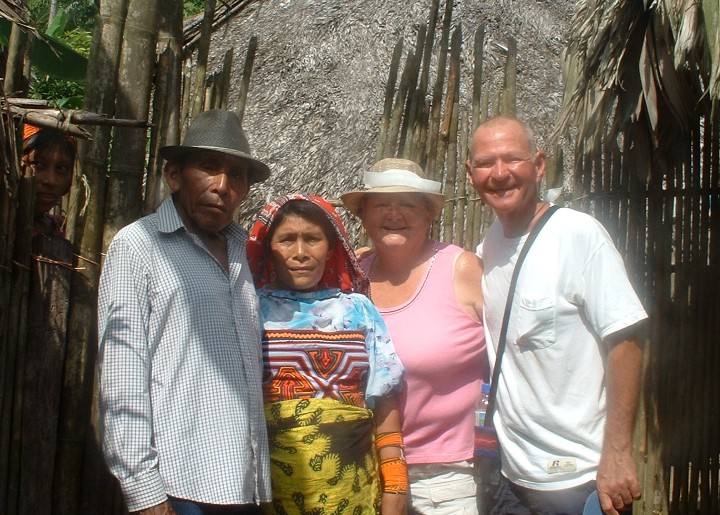
Cuna Couple and us

Crab for Dinner

Ulus with Village Kids

Craft Sellers

Mirielle gets a Bracelet

Ulu Selling Produce
We sailed into Obaldia, Panama, at the Columbia border, to check-in to the San Blas area in 30 knots of wind on 8-10' seas anchoring
in the rolling surf off the beach. January is rough for weather here and we had to hang on much of the time! Most cruisers go
right to the happy, secluded anchorages in the western area of the San Blas closer to the canal but we wanted to see several traditional
villages and get to know the Cuna Indians directly. The eastern villages are less traveled and they were very warm and welcoming.
Each stop entailed a visit to the chief or "Saila" to ask permission and leave a gift. Ray and Mireille on
Complicite and the CYAN crew had purchased many items that are valued by the Cuna while we were in Cartegena.
These were: needles, thread, reading and sun glasses, cooking oil, detergent, rice and lots of "caramelos", candy
for the charming kids! We also went through all our clothes and gave away what we could. We bought and gave out
more than 10 big bags of candy to the kids that would greet and follow us or come up to the boat in their ulus.
We bought our produce, eggs and bread from "market" ulus that would come by to sell to us. The price and quality was always good.
We had many chances to buy fresh fish and crabs and lobsters, cheap...we ate very well for the 5 week visit!!! The Cuna
are remarkable sailors, rowers and fishermen. We would be sailing in a bay in a stiff breeze and heeling and get passed by
ulus rowed right through the big waves.
Visiting the Cuna villages was like stepping back in time. They sleep in hammocks in bamboo, palm thatched roof huts,
cook over an open fire, have dirt floors, dug out canoes called "ulus" and still educate the kids while preserving
the traditional ways. We met several teenagers headed for university. Their demeanor is most warm and charming and
there is so much we can do to help them if we take the time. We copied and printed many documents they needed,
took a whole lot of photos and printed them for ID cards that they needed, and Chuck even used his woodworking skills
to build a new pot handle from teak we had on board. They so much appreciated our help and it was our pleasure. Complicite's
crew handed out many English/Cuna/Spanish dictionaries they had printed from our guide book. They were delighted to get them.
We wish the photo of the 15' Crocadile in Careto had turned out! He was feeding 50' from where the 4 of us were having happy hour!
What a sight...here we were right off the jungles of Panama. The coast was more mountainous than we expected. We
heard howler monkeys calling at night...something like a demon voice from "The Exorcist" yelling across the bay.
There are so many interesting birds and other creatures that we know we are in a special, more exotic, place
Boat at anchor |
Beaching the dinghy |
Beach Picnic Guys |
Carreto Police |
Cuna Couple and us |
Crab for Dinner |
Ulus with Village Kids |
Craft Sellers |
Mirielle gets a Bracelet |
Ulu Selling Produce |
We couldn't leave without acquiring a taste for the remarkable kind of needlework called "Molas".
Both men and women make them but mostly it's the women and children as young as 7. The bright colors and detail and subject matter
of the molas was fascinating and show the interests and customs of the Cunas. Complicite's crew bought 36 and we got 32. The mola
makers would ofen row up along side to show their work and sell them. We also bought many in the villages we visited where we were
invited into several homes, seated and presented with molas to choose from. We also bought beaded jewelry and baskets.
The photos don't begin to show the layered detail of the mola itself. It involves applique and embroidery so minute that you really
can't see the stitches of the best ones.
The photos of the women show how the molas are traditionally made into blouses, worn with bright printed wrap skirts, head scarves
and many rows of leg beeds. The women also wear their own style of homemade bright make-up to make them attractive and the men are
often tatooed but wear shorts and teeshirts. So boring compared to the stylish women!
We visited the villages of Carreto, Pinos, Tigre, Ustupu [the largest "city", population over 8000] and passed by
hundreds of very small island and mainland communities on our 100 mile coastal journey before getting to the western anchorages that
were so populated with other cruisers. The wind finally died down enough for us to enjoy the water when we weren't anchored in crocadile infested
areas. We got to do some prime snorkeling and fishing but mostly caught shark! We did laundry in a fresh water spring on an island to save water
like the indians do. Nice to try once in a while...not gonna make a habit of it!
We had a good cruiser friend, Kieth, on AFTERYOU,
unfortunately, lose his boat after strong winds blew him onto a reef. The rescue efforts cause a huge gash hole to form and it sank in 160 feet
of water. We assited a diver accident by quickly taking extra diving tanks and a doctor to the salvage area. The diver turned out OK
but stunned.
On the western islands cruisers would get together to burn their trash and have potluck dinners for a social life.
Next we sailed to the Panama Canal area to await our crossing.

Mola with Maker
Vincencio, Mola Master
Selling from ulu
Turtle Mola
Sea theme Mola

Cuna Village Street
Huts in Village
Ulus in village
Mango Burl on Hike
View of Pinos Island

Shopping in Tigre
Laundry on Island
Chuck Dip Spring Water
Island Ancorage
Coconut Bread
Baker's Family

|
|
|
|
|